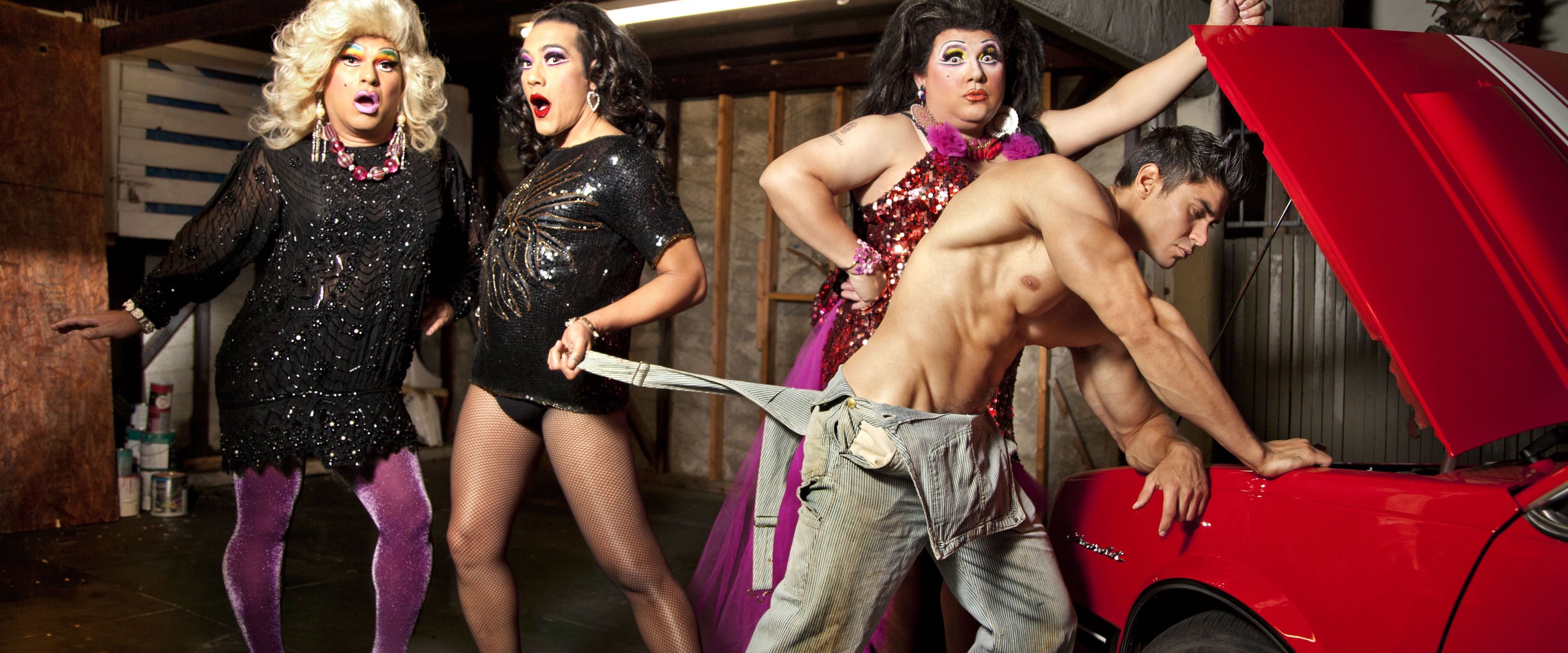
Men have dressed like women for centuries–from the time of the ancient Greeks, to the Middle Ages, to Kabuki performances in Japan. Drag, in all its forms, has captivated, inspired, and enamored audiences everywhere. We spoke with author and self-proclaimed ‘Drag Hag’ Frank DeCaro about the power of drag and his upcoming book Drag: Combing through the Big Wigs of Show Business.
CHF: Drag is powerful for many reasons; has this always been true?
Frank DeCaro: Drag has been a vital part of show business since the earliest days of theater, film, and television, and it certainly has always had the power to enthrall an audience. Granted, Euripides’ Medea wasn’t exactly Tyler Perry’s Madea, but there has always been a lot of crossdressing going on in popular entertainment, and audiences of every orientation have been eager to pay to see it.
CHF: How do you define a powerful drag performance?
Frank DeCaro: The most powerful drag performances are truly captivating. When a drag artist is firing on all cylinders, he or she has the power to convince audiences of his or her character’s “realness.” Audiences then can’t help but get caught up in the charade, whether the performance is funny or sexy or mysterious or all three and more. That’s the kind of drag art that I love.
CHF: What’s your personal connection to drag? What led you to do this book?
Frank DeCaro: I’ve been a “drag hag,” as I like to say, for almost my entire life! I’ve been hooked since I first saw Flip Wilson do his drag character Geraldine Jones when I was, like, seven years old, and before that, I was always raiding my mother’s wardrobe for play clothes.
When I was a teenager, I started going to gay bars and I’d see drag there. The book, in fact, is dedicated to my first drag queen, Mimi, who used to perform at Charlie’s West in East Orange, New Jersey. I was crazy about that girl! She’d lip sync to “Where the Boys Are” dressed in the Italian flag!
Over the years, I’ve gotten to interview everyone from Charles Pierce to Divine to Lady Bunny. Likewise, I’ve been following the careers of drag artists from Charles Busch to Lypsinka to Harvey Fierstein to RuPaul for decades. Now, like everyone else, I’m obsessed with RuPaul’s Drag Race and I’ve met many of them! Plus, there are always queens – young and old, fledgling and experienced – to discover. For instance, I’m Dina Martina’s biggest fan and I’ve made it my mission to turn every friend I have on to her. She’s a litmus test – if you don’t love Dina, we can’t be friends.
Now if I could just get cast as Edna Turnblad in a production of Hairspray somewhere, my life would be complete.
CHF: When considering the entertainment industry’s intersection with drag culture, television plays a very important role. Your book mentions the TV-specific trope of Drag Queens vs. Men Dressed as Women, which I learned comes from a rich and complicated history. Is this trope still prevalent today? What has changed?
Frank DeCaro: Drag on television is SO much different now, and thank heaven for that!
For the first sixty years of its existence, TV presented drag that was either funny or frightening. It was either Milton Berle dressed as Carmen Miranda, or John Davidson dressed as Carol Channing and murdering men with a hat pin on The Streets of San Francisco.
Don’t get me wrong – we LOVED those performances, not to mention Jamie Farr using drag to pursue an army discharge on M*A*S*H, Tom Hanks looking for a cheap apartment in a women-only building on Bosom Buddies, or Harvey Korman cutting up (and often breaking up) on The Carol Burnett Show. He was in drag so often on that show that it still blows my mind today.
But throughout much of the history of TV, drag was straight and ugly and anything but gay. With very few exceptions, it was a macho guy not being able to walk in heels but still managing to get hit on by another straight guy who couldn’t tell he was a man in a dress. It’s like they didn’t have eyes.
Now, thanks to the popularity of RuPaul’s Drag Race, we get to see drag artists – gay, trans, queer people – in all their three-dimensional glory. These are drag queens with full lives and intriguing back stories and actual sexuality who share the same hopes and dreams of equality and success and approval that every other American has.
Faced with such verisimilitude, audiences no longer tolerate the “look what an ugly woman I make” schtick, and hooray for that.
CHF: Your book pays tribute to such drag icons as Divine and Leigh Bowery. Drag performances like theirs push the boundaries of beauty and femininity, while also challenging the “Miss America” tradition. Could you say more about this?
Frank DeCaro: Drag is about pushing the boundaries of EVERYTHING. And I’ve always been drawn to the glamorously transgressive. I howl when John Waters says that Divine scared the drag queens of his day. Divvy was punk rock before there was punk rock! I love that she did drag and took the piss out of it at the same time! You’ve got to admire someone who once said, “All my life I’ve wanted to look like Elizabeth Taylor and now she’s starting to look like me.”
This also goes back to my saying earlier that I’ve had a ringside seat for all the best drag – I not only interviewed Divine and saw her perform, but I also got to see Leigh Bowery do his infamous “Enema Show” in person in London. Basically, this giant man came down from the ceiling on a swing wearing only gold body paint and a pussy wig, pranced around the stage for a minute to Strauss’ “Also Sprach Zarathustra,” threw his legs over his head and shot a geyser of water out of his ass and then got back on the swing and disappeared up into the rafters. It was astounding...but I felt bad for the stage manager who had to clean that up! That was some hilarious shit, if you’ll pardon the expression. Bowery confounded notions of body image, propriety, gender stereotypes, and taste. I just adore that kind of drag – and I’m glad it’s only one of the flavors today. Drag really is like Baskin Robbins now. Whatever flavor of drag you want, it’s there ready to be scooped. But, for me, I’ll always like the full-fat version best.
CHF: What do you envision the future of Drag to be like?
Frank DeCaro: I think the very notion of drag has changed to include everything from cosplay to crossdressing, glittered beauty to genderf*ck. You don’t even have to be a man to do it. You can be a drag queen, a drag king, a bio queen, or a drag kid – nine-year-olds do drag now and they’re fierce! In the future, to paraphrase Andy Warhol, everyone will be a drag queen for fifteen minutes.
CHF: Can you share your top must-sees and reads for people who want to rejoice in sparkle and glamour?
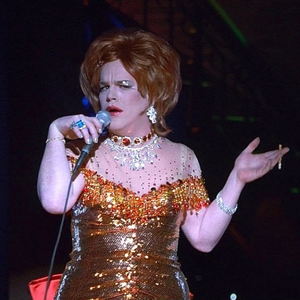
Frank DeCaro: Well, when I’m not posting daily “drag moments” on Instagram at @frankdecaroshow (above), I love following:
- the drag kid @desmondisamazing
- the outrageous @official_lady-bunny
- and the LGBTQ historian @owenkeehnen who is really keeping our gay past alive, particularly as it relates to Chicago
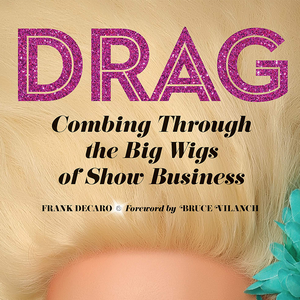
Favorite drag books:
- Ladies or Gentleman: A Pictorial History of Male Cross-Dressing in the Movies by Jean-Louis Ginibre
- The Simply Divine Cut-Out Doll Bookby Van Smith
- Brini Maxwell’s Guide to Gracious Living by Brini Maxwell.
- But now I think Drag: Combing Through the Big Wigs of Show Business is nudging them all down a notch on my personal hit parade
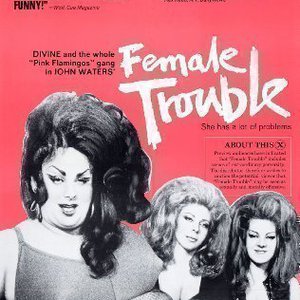
Favorite drag films:
- Female Trouble
- Girls Will Be Girls
- To Wong Foo, Thanks for Everything! Julie Newmar
- Hell, Female Trouble is my favorite film, period.
Header Image Photo Credit: Dusti Cunningham
Learn more about DeCaro’s event with Chicago Drag Legends Chilli Pepper, Lucy Stoole, and newcomer Angelica Grace here.
Become a Member
Being a member of Chicago Humanities is especially meaningful during this unprecedented and challenging time. Your support keeps CHF alive as we adapt to our new digital format, and ensures our programming is free, accessible, and open to anyone online.
Make a Donation
Member and donor support drives 100% of our free digital programming. These inspiring and vital conversations are possible because of people like you. Thank you!